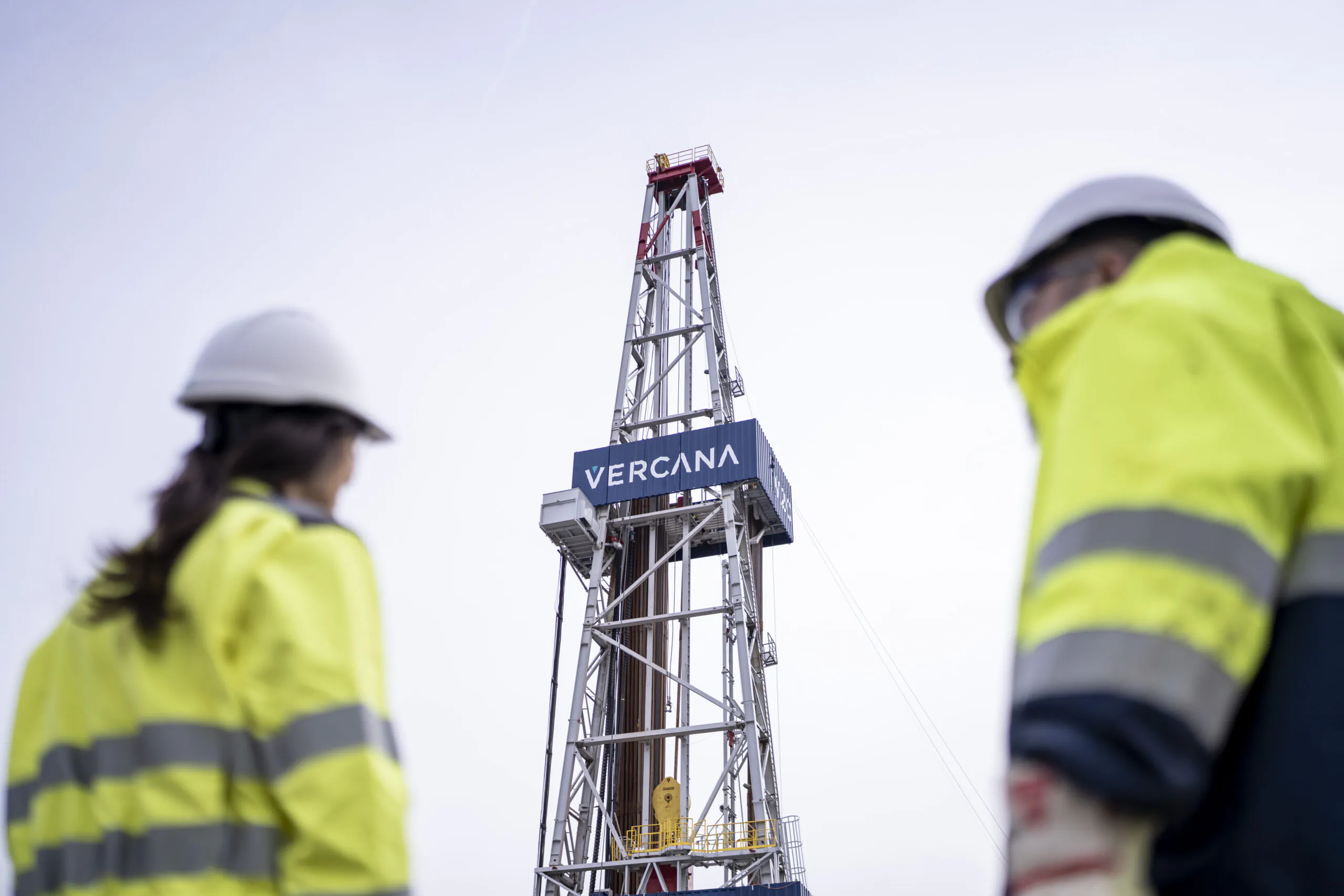
Geothermal Drilling.
Status Quo Our drilling site Schleidberg.
Our first drilling site, named “Schleidberg,” is located in the northeastern part of the Insheim municipal area.
The main well, LSC-1, and the side branch, LSC-1a, were safely and efficiently completed by Vercana, Vulcan’s in-house drilling company.
Once all drilling work is fully completed, thermal water can be extracted. The heat from the thermal water can then be captured at the drilling site and supplied to surrounding communities. In this way, the Schleidberg drilling site will play a key role in providing a redundant heat supply for Insheim and the entire project.



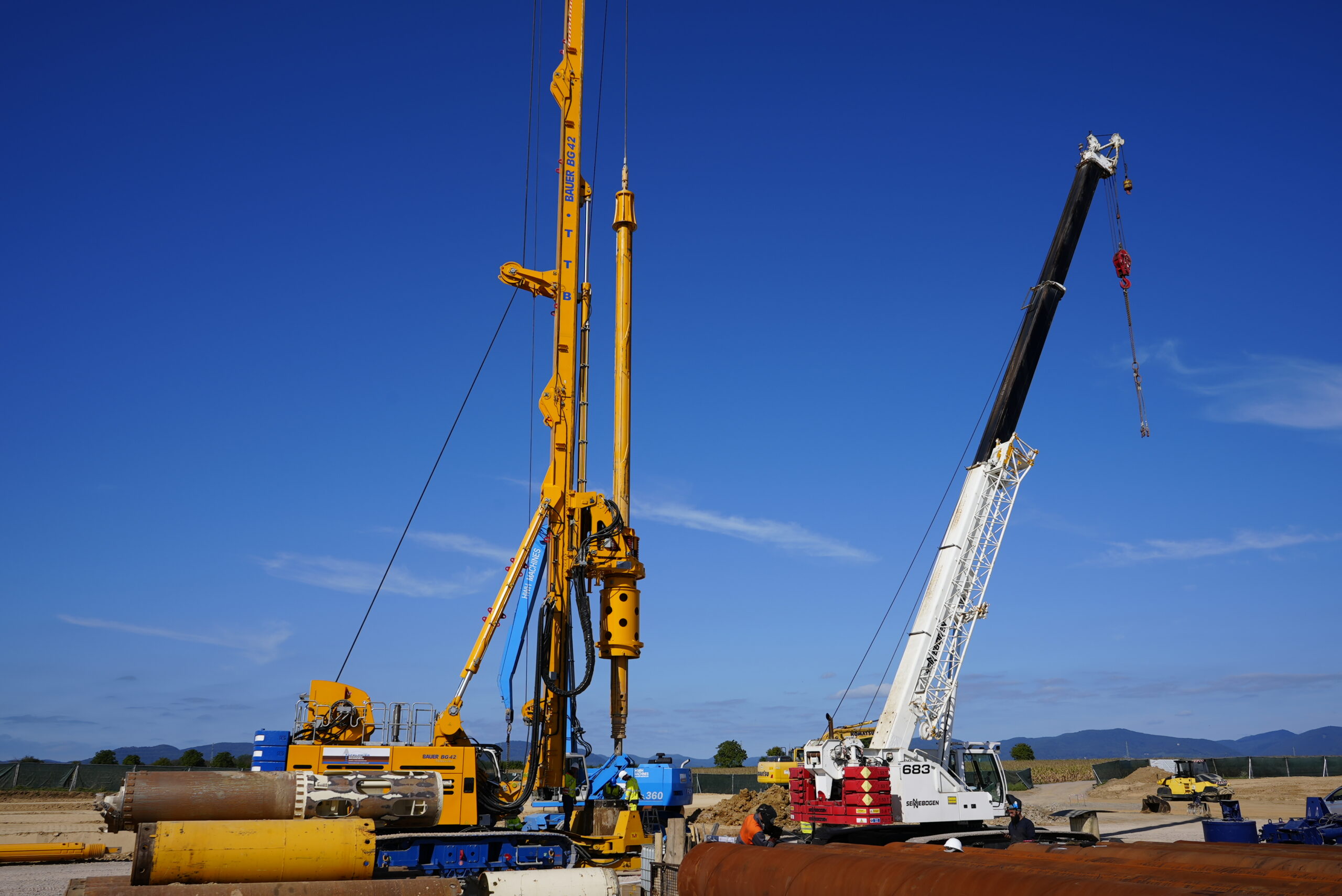
Karlsruhe, January 21, 2026. Vulcan Energy is pleased to announce positive results from the production test at the first well at the Schleidberg drilling site in the Insheim district, near Landau in the Palatinate. After Vulcan had already reported positive results regarding the geology, temperature, and lithium content in the thermal brine in November 2025 following the completion of the vertical well LSC-1 and the first lateral LSC-1a, the reservoir’s performance in terms of production and flow rates has now been tested via the new lateral LSC-1b.
Our drilling site Trappelberg
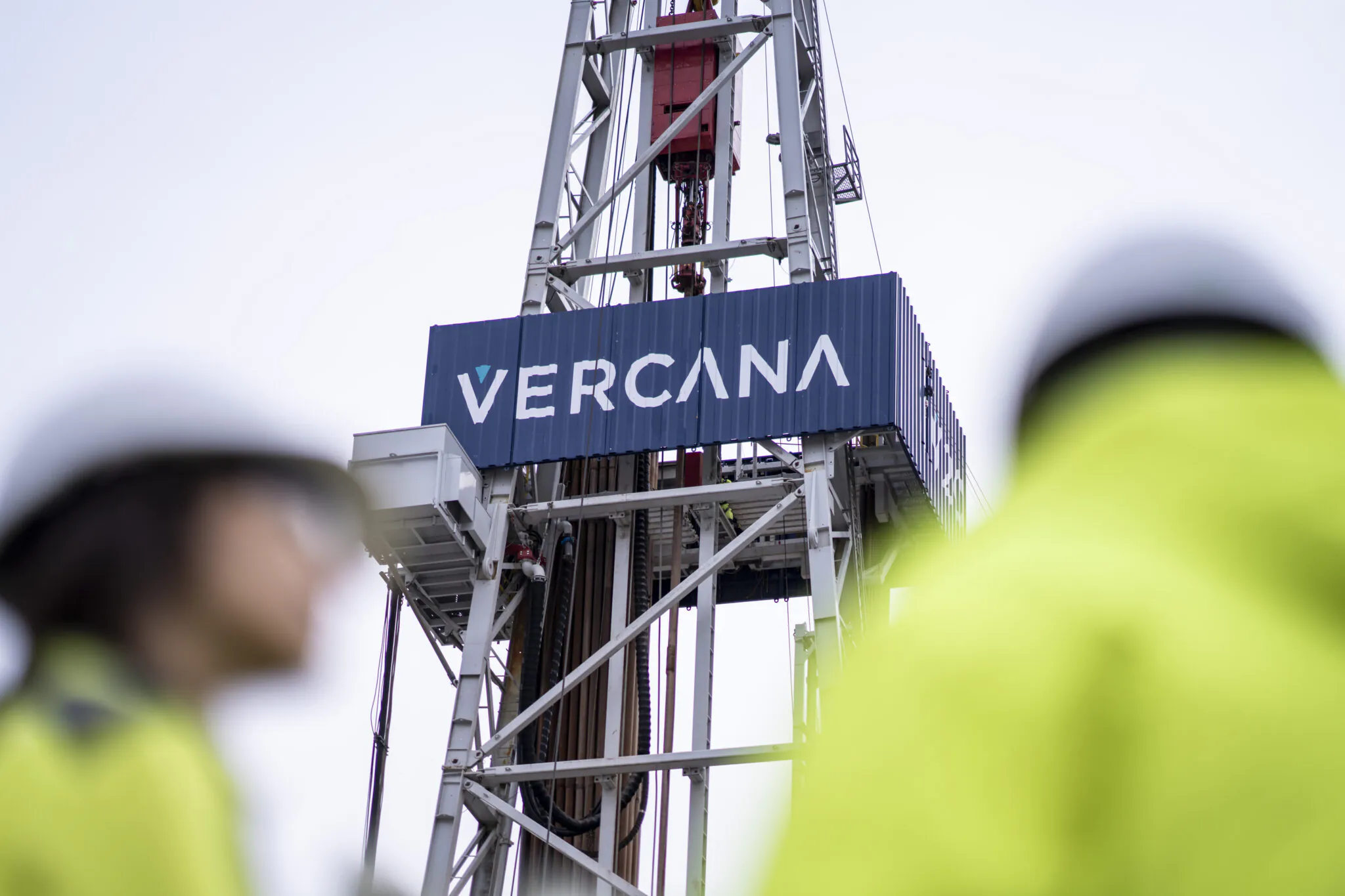
In the northern part of the Rohrbach municipal area, another drilling site—Trappelberg—is being developed. Construction of the drilling site began in early 2026. Several geothermal wells are planned; these wells will also play an important role in providing a redundant heat supply and in the overall project.
On March 12, 2026, the official groundbreaking ceremony was held together with representatives from the local municipality of Rohrbach, the Herxheim municipal association, and surrounding municipalities.
Drilling is scheduled to begin in late 2026.
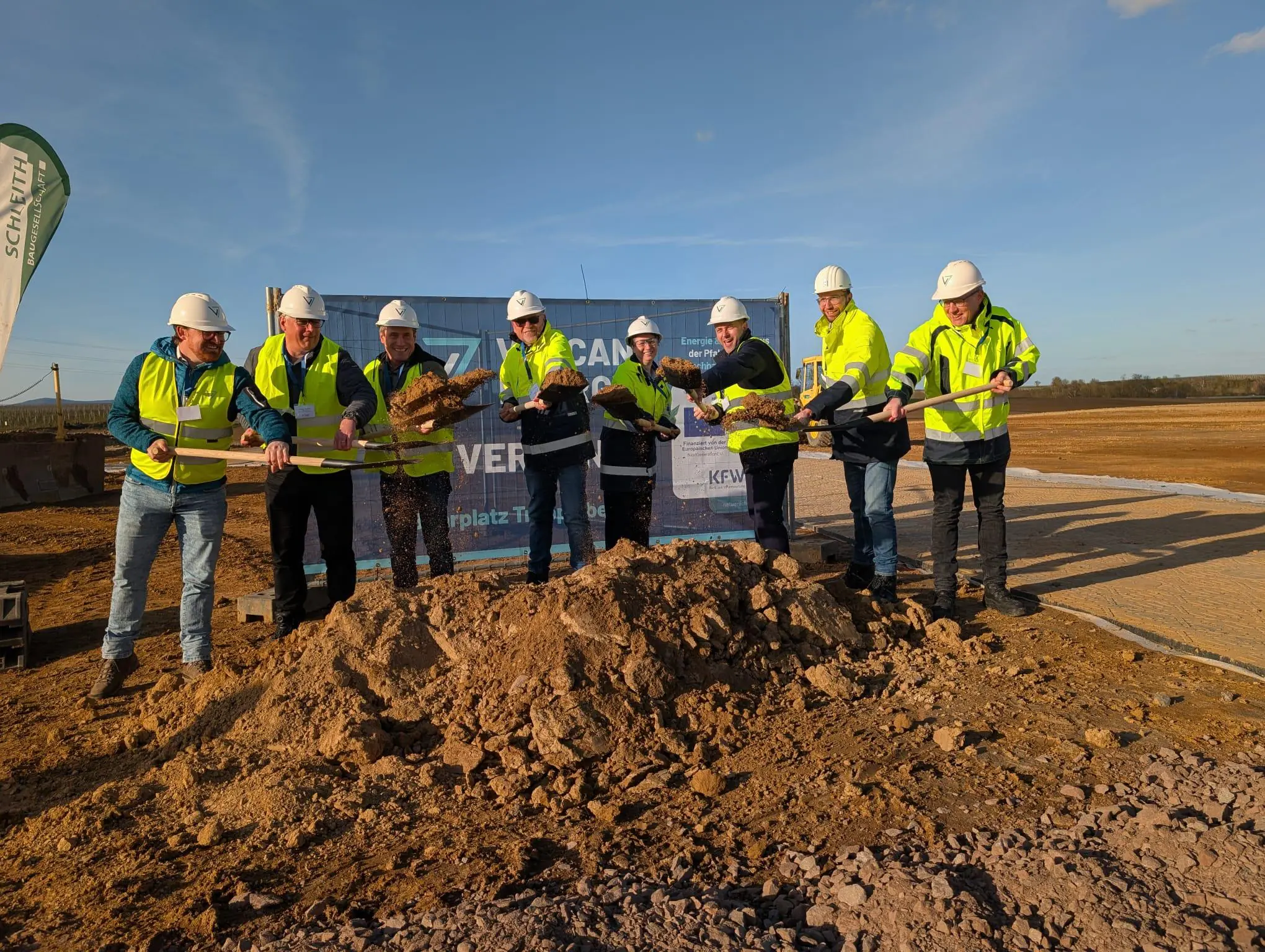
Procedure of a Drilling.
- Using seismic results to find a site
- Purchase of property
- Preparation of the drilling construction site
- Erection of drilling rig and equipment
- Start of drilling
- Closing work
- Connection and commissioning
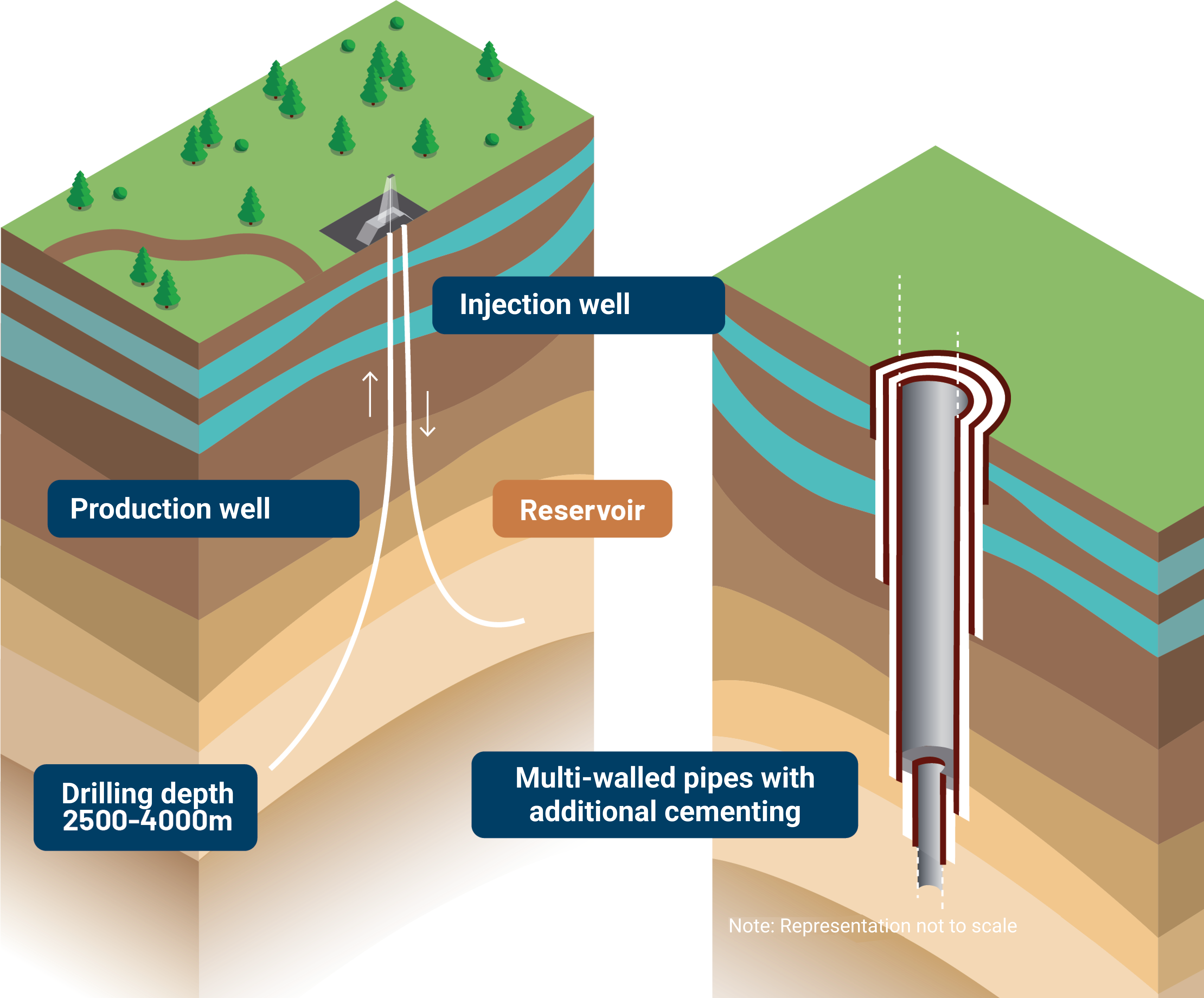
Groundwater protection Standpipes.
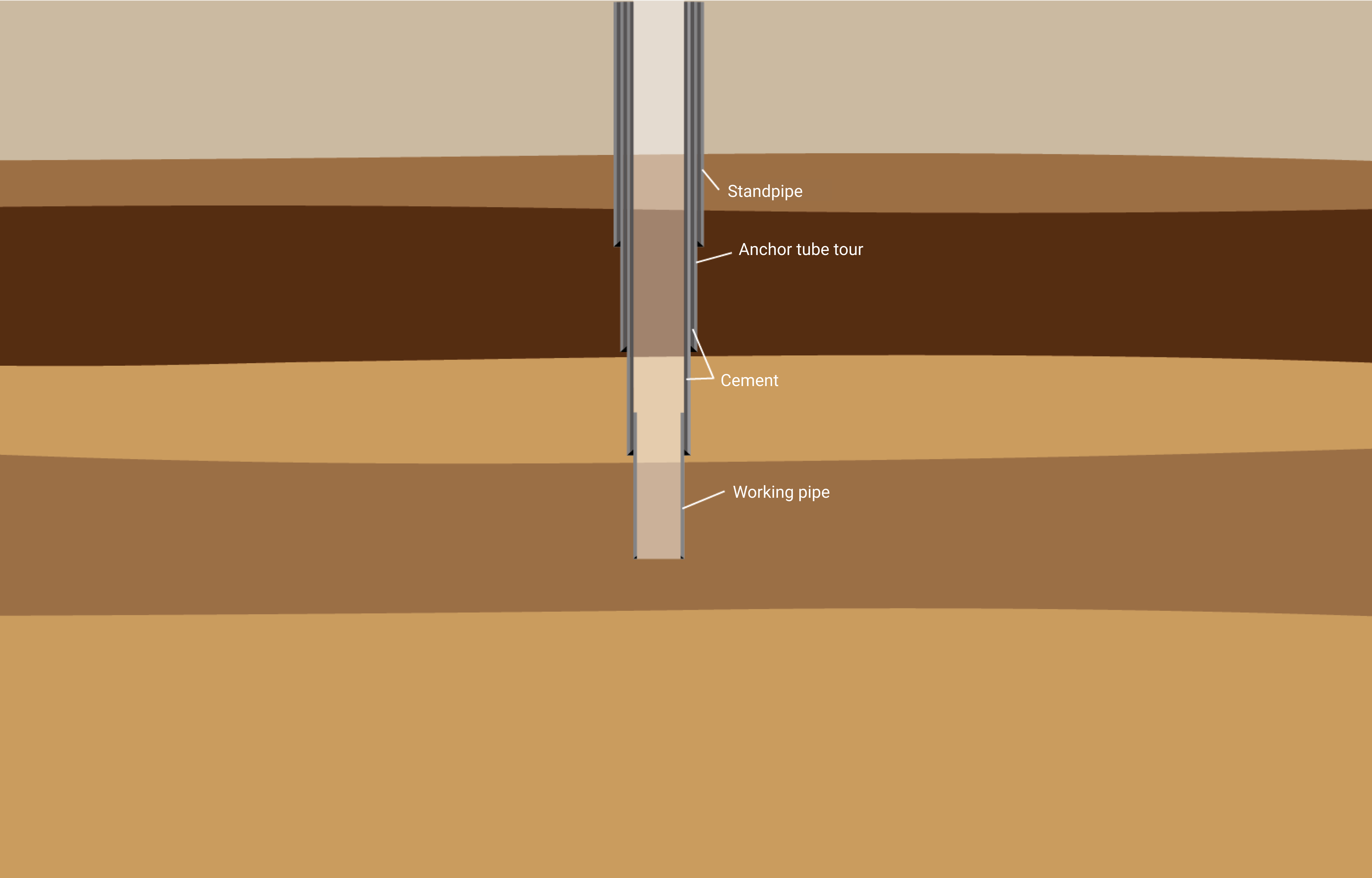
To protect and insulate the groundwater, the aquifers are secured with so-called standpipes. The uppermost aquifer is penetrated with a thick-walled steel pipe. The subsequent drilling is carried out in several phases, with each section being secured by a further standpipe. Once the target depth of each section has been reached, the borehole is cased and the intermediate space cemented. The diameter decreases from section to section. The multi-walled steel pipes with additional cementing create several impermeable layers that separate the aquifer from the thermal water. Furthermore, permanent groundwater monitoring provides additional safety for the protection of the groundwater.
Get in touch with us Do you have questions?
Please contact us directly if you are interested. We are here for you.