Joint Project for Climate-Neutral Lithium and Renewable Energy First project phase “Lionheart”.
Vulcan aims to produce 24,000 metric tons of lithium hydroxide per year during the first phase of the “Lionheart” project. This is enough to manufacture batteries for approximately 500,000 electric vehicles. Vulcan’s project thus represents an important step toward establishing a sustainable European lithium supply chain.
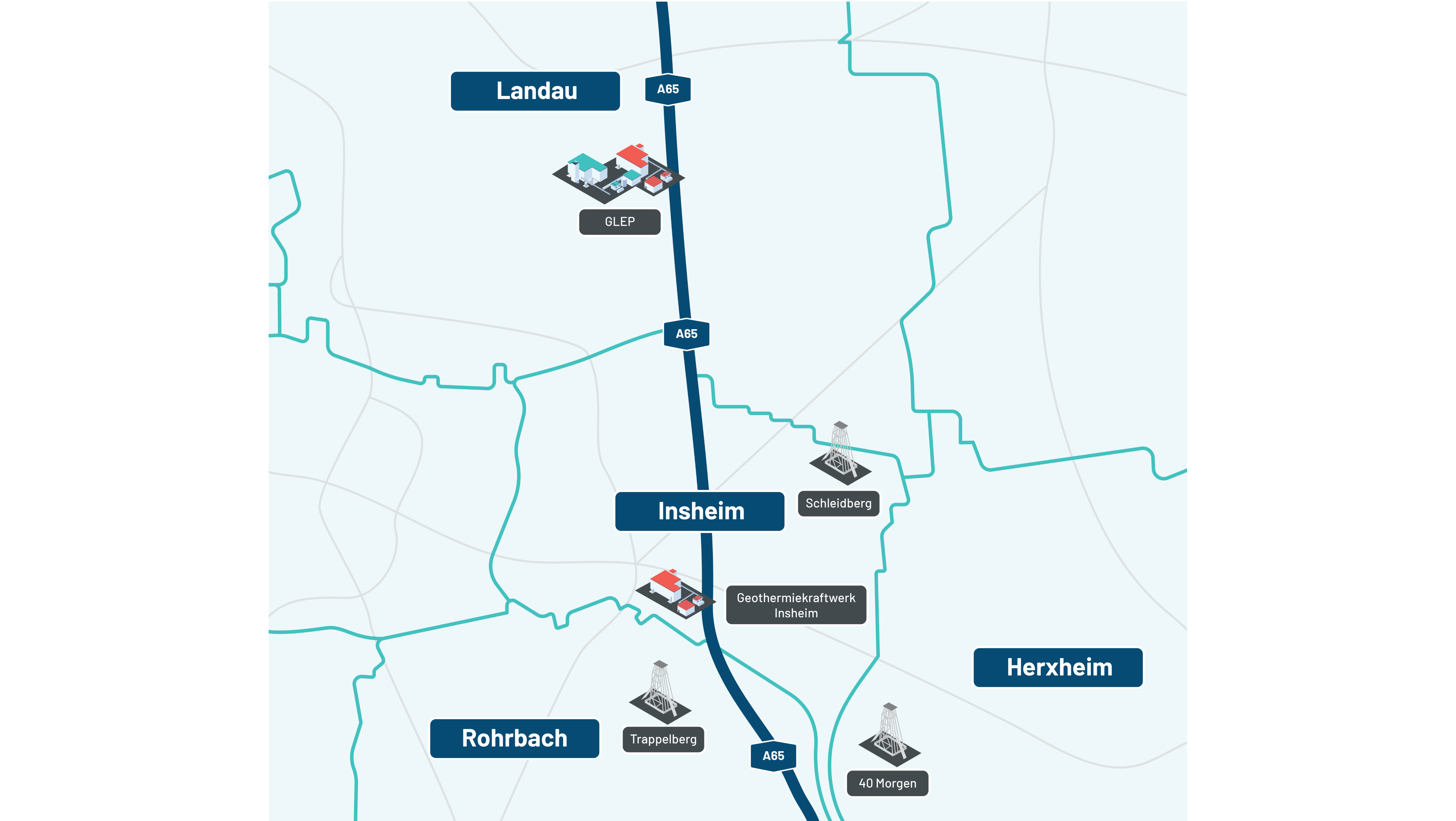
The Phase One “Lionheart” area encompasses the city of Landau and the surrounding municipalities of Insheim, Herxheim, and Rohrbach. In addition to the existing geothermal power plants in Insheim and Landau, additional drilling sites for geothermal energy are to be developed in the region to extract thermal water.
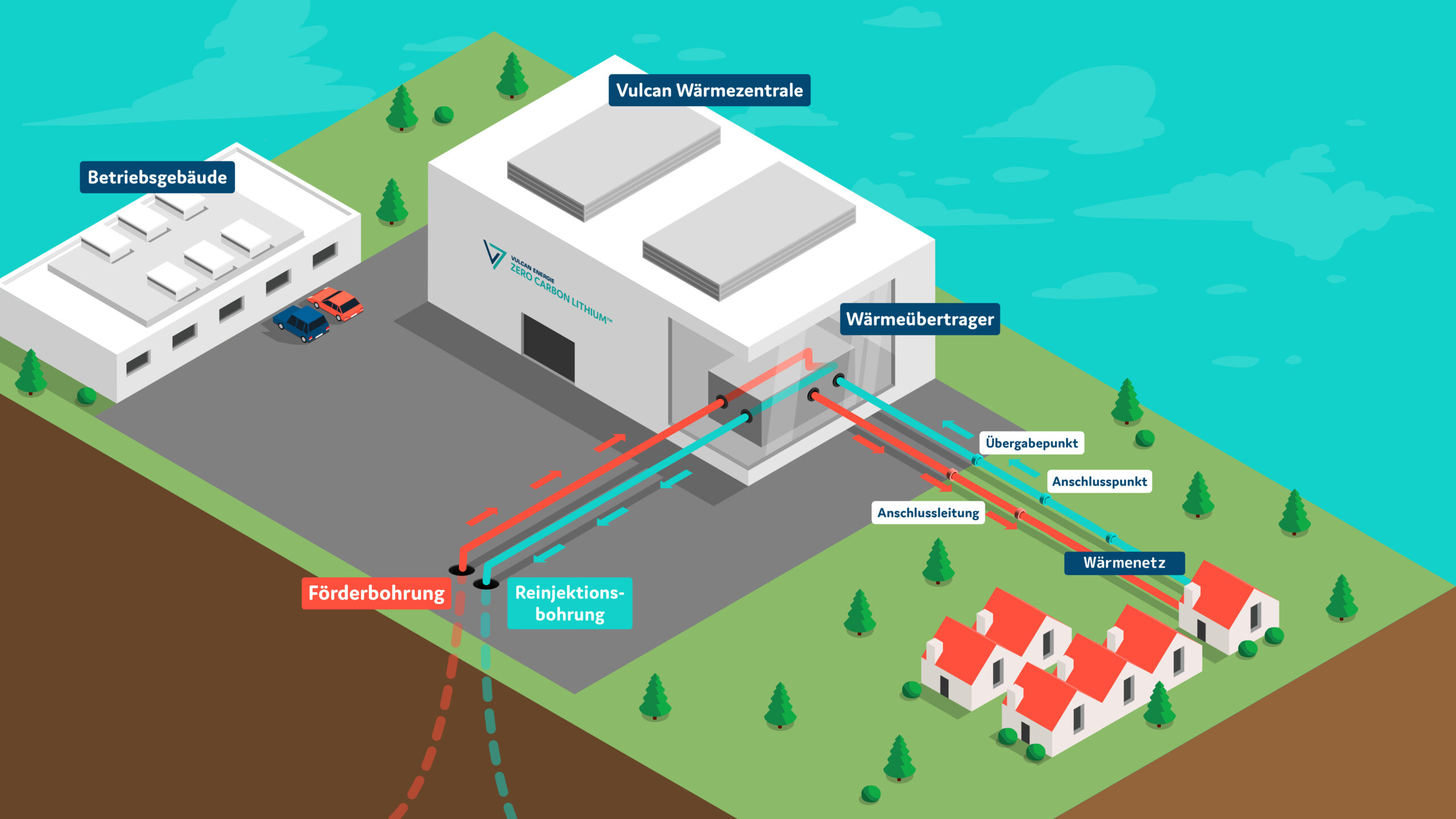
From these drilling sites, the lithium-rich thermal water is transported via pipelines to central facilities in Landau for lithium extraction and for the generation of energy and heat. After the heat and lithium have been extracted from the thermal water, the cooled brine is returned to the subsurface, where it can once again accumulate heat and lithium.
Phase One will not only provide a local and CO2-neutral source of lithium for the European battery industry, but will also bring economic and social benefits to the region. Examples of this include creating and maintaining jobs or supporting the energy and heating transition. It is also intended to help local authorities achieve climate protection targets and provide the population with a sustainable and reliable heat supply. llllll



Vulcan is building a central lithium processing plant in the Höchst Industrial Park in Frankfurt. There, the extracted lithium chloride is converted into lithium hydroxide through electrolysis, which serves as the raw material for the battery industry.
Vulcan works closely with regional energy providers to supply heat to the surrounding communities. Consequently, these providers also serve as the points of contact for end customers.